Have you ever felt a little unsure about what to say when lighting the Hanukkah candles? Maybe you want to honor the tradition but struggle to remember the words, or you just want your children to understand the meaning too. It can feel a bit confusing, especially if it’s your first time or if you’re trying to make the moment meaningful for your family.
In this post, we’ll guide you through the Hanukkah Prayer step by step, explain what the words mean, and even share simple, child-friendly versions. By the end, you’ll feel confident and inspired, ready to light your menorah with intention, joy, and understanding.
What Is the Hanukkah Prayer and Why Is It Important?
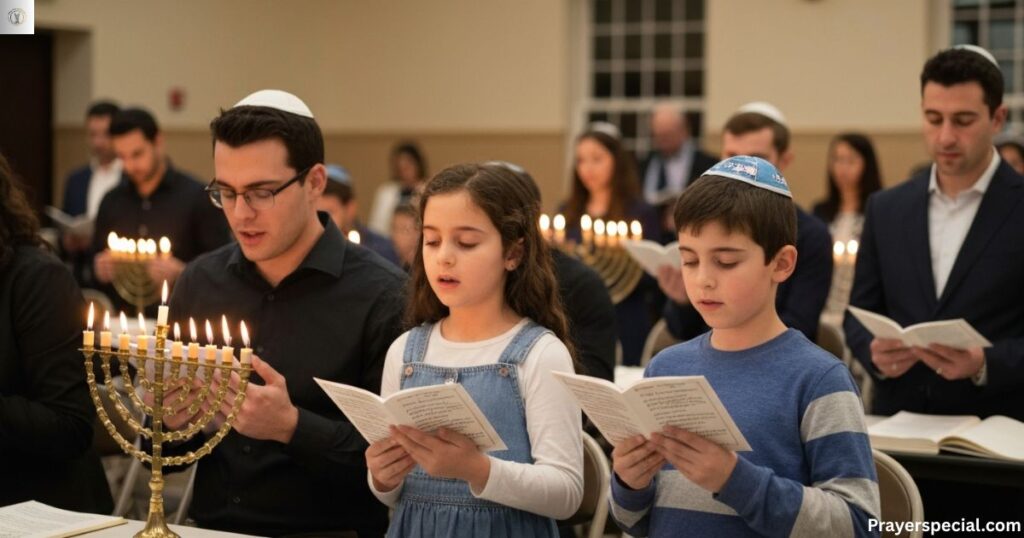
The Hanukkah prayers are short blessings recited before lighting the candles each night of the Festival of Lights. These prayers are not only ritual formulas but meaningful reflections that connect the act of lighting the menorah to Jewish history, faith, and gratitude. Each prayer highlights a different spiritual theme sacred duty, remembrance of miracles, and appreciation for life itself.
The First Hanukkah Prayer: Honoring the Sacred Commandment
This prayer focuses on the act of lighting the Hanukkah candles itself. It reminds us that kindling the lights is not just a tradition passed down through generations, but a sacred responsibility that connects everyday action with spiritual purpose.
At its heart, this prayer expresses the idea that holiness can be created through mindful action. By lighting the candles, we affirm that even small, repeated rituals can bring meaning and light into the world.
Alternative ways to express this idea include:
- A moment to recognize the power of intention behind our actions
- A reminder that spiritual connection often begins with simple deeds
- An acknowledgment that tradition shapes identity through practice
The Second Hanukkah Prayer: Remembering the Miracles
The second prayer reflects on the miracles experienced by the Jewish people in the past and connects them to the present moment. It is a prayer of memory and gratitude, emphasizing that hope and resilience are not limited to history but remain relevant today.
Rather than focusing only on extraordinary events, this prayer invites reflection on the enduring strength that allowed the Jewish people to survive and continue. Lighting the candles becomes a way to recognize both ancient miracles and the quiet perseverance found in every generation.
This idea can also be understood as:
- Gratitude for survival against overwhelming odds
- Recognition that hope renews itself in every era
- A reminder that faith and courage are ongoing miracles
The Third Hanukkah Prayer: Gratitude for Reaching This Moment
The third prayer is recited only on the first night of Hanukkah and marks the significance of new beginnings. It expresses thankfulness for life, endurance, and the opportunity to experience this sacred time once again.
This prayer encourages mindfulness pausing to acknowledge that simply arriving at this moment is meaningful. It recognizes personal and collective journeys, celebrating the ability to gather, reflect, and kindle light despite uncertainty or hardship.
Other ways this feeling may be expressed include:
- Appreciation for resilience and continuity
- Gratitude for shared moments and presence
- Recognition of time as a gift rather than a guarantee
Why These Prayers Matter Today
The Hanukkah prayers do more than accompany candle lighting they frame the entire holiday experience. They connect action with meaning, history with the present, and ritual with reflection. By reciting them, individuals turn the menorah into a source of spiritual awareness, not just illumination.
In a world often filled with distraction, these prayers offer a pause a moment to remember, to appreciate, and to renew hope through light.
Traditional Hanukkah Prayer in English and Hebrew
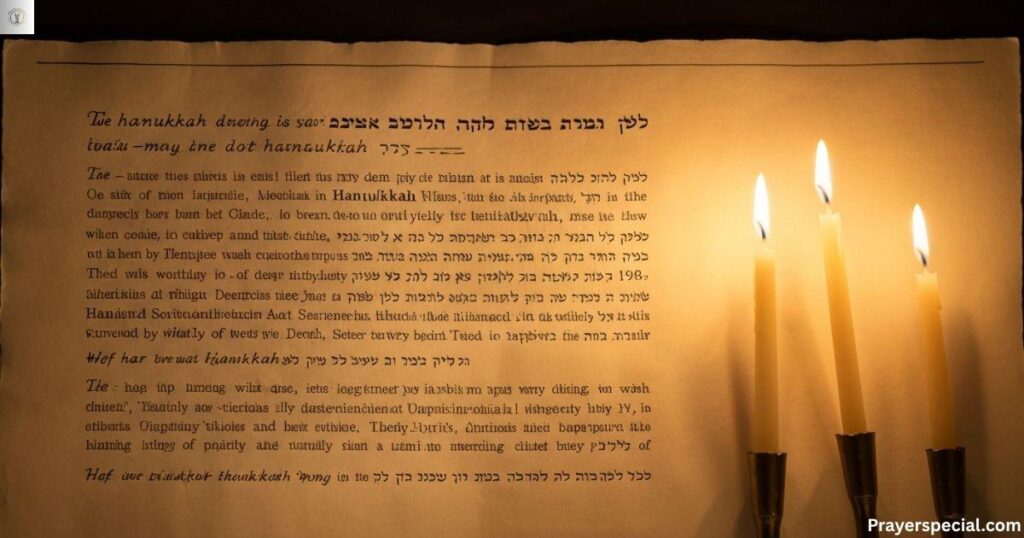
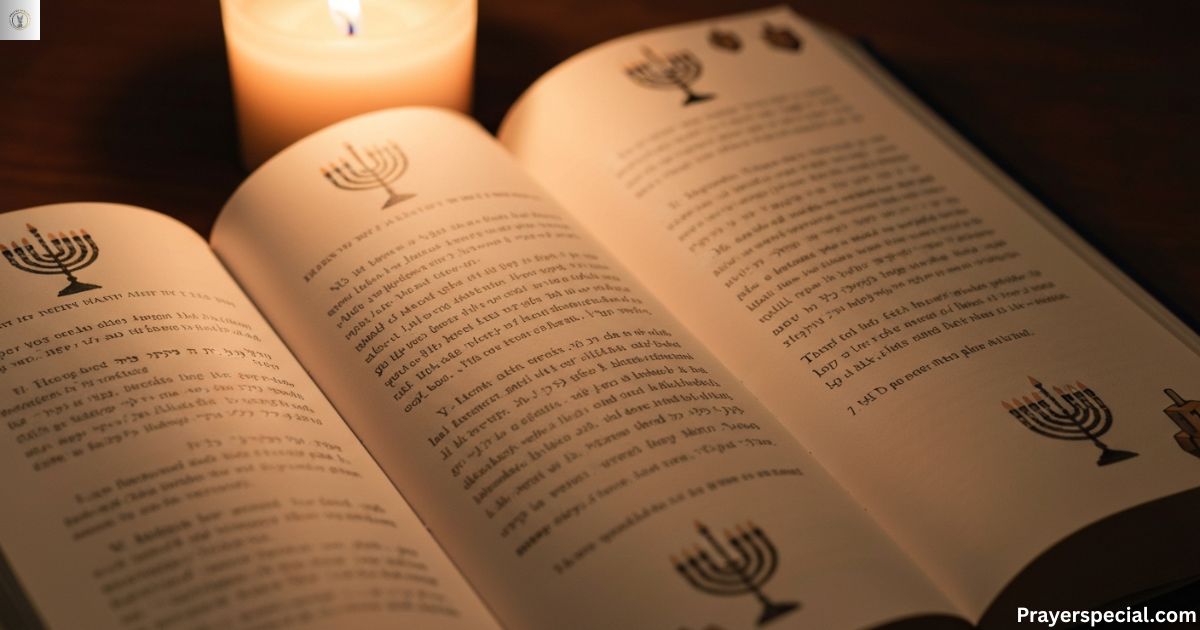
The traditional Hanukkah prayers are recited before lighting the menorah and are central to the candle-lighting ritual. Each prayer highlights a different spiritual theme sacred action, remembrance, and gratitude. Below, each blessing is presented with its Hebrew text, followed by a clear, original English explanation and alternative ways to understand its message.
The First Hanukkah Prayer: Blessing for Lighting the Candles
Hebrew:
בָּרוּךְ אַתָּה יי אֱלֹהֵינוּ מֶלֶךְ הָעוֹלָם
אֲשֶׁר קִדְּשָׁנוּ בְּמִצְוֹתָיו
וְצִוָּנוּ לְהַדְלִיק נֵר חֲנֻכָּה
Meaning in English (Original Interpretation):
This prayer acknowledges that lighting the Hanukkah candles is a sacred act rooted in tradition and purpose. It affirms that holiness is created through intentional actions and reminds us that spiritual meaning can be found in simple, repeated rituals.
By reciting this blessing, the act of lighting a flame becomes more than symbolic—it becomes a moment of connection between daily life and spiritual values.
Other ways to express this idea include:
- Recognizing intention as a pathway to holiness
- Honoring tradition through mindful action
- Transforming routine gestures into sacred moments.
The Second Hanukkah Prayer: Blessing for the Miracles
Hebrew:
בָּרוּךְ אַתָּה יי אֱלֹהֵינוּ מֶלֶךְ הָעוֹלָם
שֶׁעָשָׂה נִסִּים לַאֲבוֹתֵינוּ
בַּיָּמִים הָהֵם בַּזְּמַן הַזֶּה
Meaning in English (Original Interpretation):
This prayer reflects on the miracles experienced by earlier generations and links them to the present moment. It invites reflection on resilience, survival, and hope—reminding us that miracles are not only events of the past but sources of strength that continue to inspire.
Lighting the candles while reciting this blessing turns memory into presence, bringing the lessons of history into today’s world.
Alternative ways to understand this message include:
- Gratitude for perseverance through hardship
- Recognition of strength passed from generation to generation
- Awareness that hope renews itself in every era
The Third Hanukkah Prayer: Blessing for Reaching This Season
Hebrew:
בָּרוּךְ אַתָּה יי אֱלֹהֵינוּ מֶלֶךְ הָעוֹלָם
שֶׁהֶחֱיָּנוּ וְקִיְּמָנוּ
וְהִגִּיעָנוּ לַזְּמַן הַזֶּה
Meaning in English (Original Interpretation):
This prayer expresses appreciation for life, continuity, and the ability to arrive at this meaningful moment. Recited only on the first night, it marks the beginning of Hanukkah with reflection and thankfulness.
It encourages a pause to acknowledge personal journeys, shared experiences, and the gift of time itself.
This feeling may also be expressed as:
- Gratitude for endurance and renewal
- Appreciation for gathering once more
- Recognition that each moment of celebration is not guaranteed
The Deeper Meaning of Reciting the Prayers
Together, these traditional Hanukkah prayers frame the menorah lighting as an act of remembrance, intention, and gratitude. They help transform candle lighting into a meaningful ritual one that honors the past, reflects on the present, and brings spiritual awareness into the home.
Through these blessings, the Hanukkah lights become symbols not only of history, but of continued hope and purpose.
Meaning Behind the Words of the Hanukkah Prayer
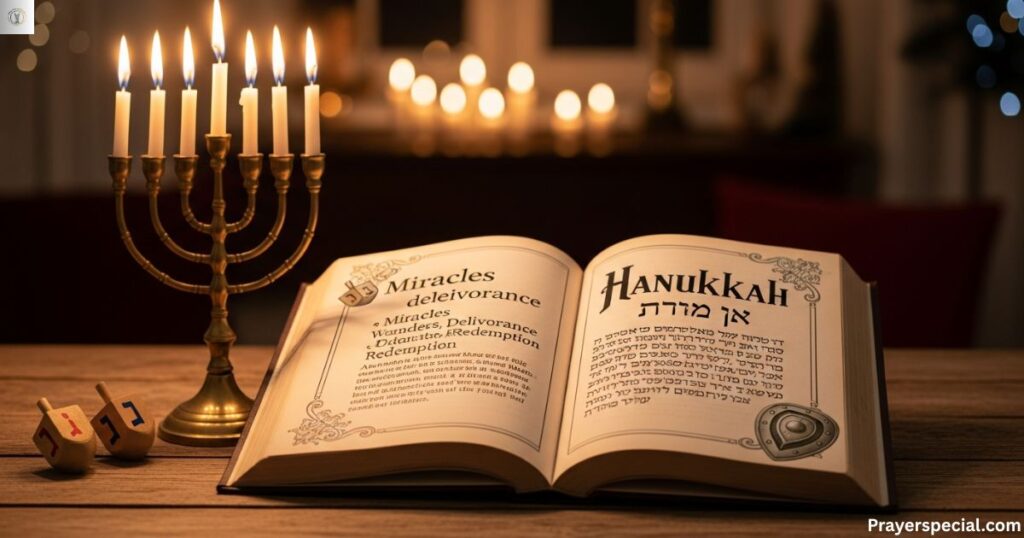
The words of the Hanukkah prayers may be brief, but they carry layers of meaning that connect ritual, memory, and spiritual intention. Each prayer highlights a distinct idea purposeful action, collective remembrance, and gratitude for life. Understanding these meanings helps transform candle lighting into a reflective and intentional experience.
“Who Has Commanded Us to Light the Hanukkah Candle”
These words emphasize that lighting the menorah is an intentional act rooted in tradition. Rather than viewing the ritual as routine, the prayer frames it as a conscious choice to participate in something larger than oneself.
At a deeper level, this phrase teaches that meaning is created through action. Lighting the candles becomes a way to bring values into the physical world, showing that spirituality can be expressed through everyday deeds.
This idea can also be understood as:
- Choosing mindfulness over habit
- Turning simple actions into expressions of purpose
- Honoring tradition through participation
“Who Performed Miracles for Our Ancestors in Those Days, at This Time”
This line connects past and present, reminding us that the story of Hanukkah is not only historical but ongoing. The prayer acknowledges that earlier generations experienced moments of unexpected strength and survival—and that those moments continue to inspire hope today.
By saying these words, we recognize that resilience is carried forward. The miracles of the past become a source of encouragement in the present.
Other ways to express this meaning include:
- Gratitude for endurance through difficult times
- Recognition that hope spans generations
- Awareness that renewal is possible even in darkness
“Who Has Given Us Life and Enabled Us to Reach This Moment”
Recited on the first night of Hanukkah, this phrase highlights appreciation for life itself. It invites reflection on the journey both personal and communal that has led to this moment of celebration.
This line encourages a pause to acknowledge survival, growth, and the ability to gather and reflect once again. It frames time as a gift and presence as something worthy of gratitude.
This feeling may also be expressed as:
- Thankfulness for resilience and continuity
- Appreciation for shared moments
- Recognition that each new beginning holds meaning
How Understanding the Words Deepens the Ritual
When the meanings behind the Hanukkah prayers are understood, the ritual becomes more than symbolic. The words guide intention, shaping the candle lighting into a moment of reflection and connection.
By engaging with the language of the prayers, the menorah becomes not only a source of light, but a reminder of purpose, memory, and gratitude values that continue to illuminate each night of Hanukkah.
Short Hanukkah Prayer for Family Gatherings
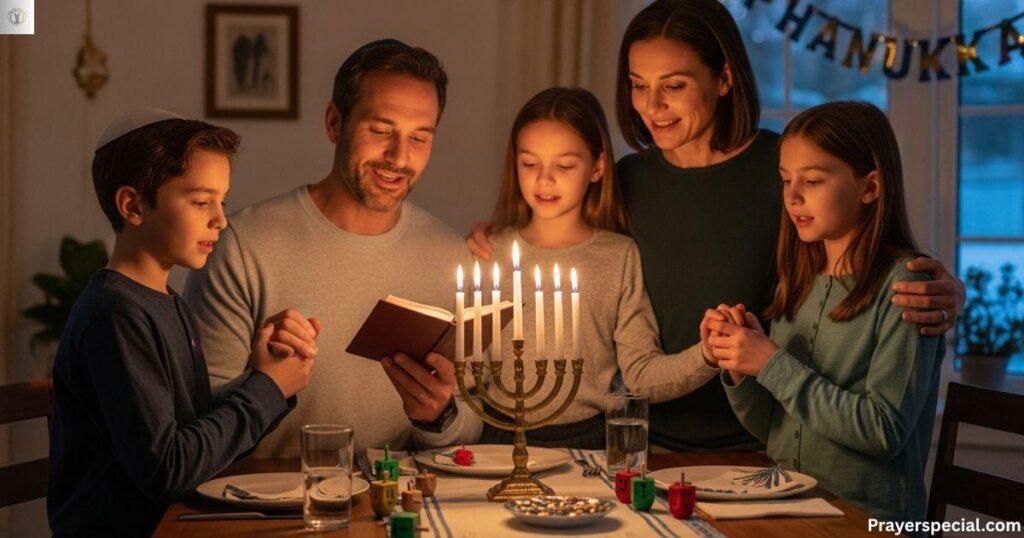
Family gatherings during Hanukkah are moments of togetherness, warmth, and shared memory. A short Hanukkah prayer allows everyone children and adults alike to participate in the candle-lighting ritual with understanding and intention. These brief prayers focus on gratitude, light, and connection, making them ideal for home celebrations.
A Simple Prayer of Light
Prayer:
May the light we kindle tonight bring warmth to our home and peace to our hearts.
As these candles shine, may they remind us of hope, kindness, and the strength found in being together.
Meaning:
This prayer centers on the symbolism of light as a source of comfort and unity. It connects the glow of the candles with emotional warmth and shared presence, reinforcing the idea that light grows stronger when experienced collectively.
Other ways to express this idea include:
- Wishing for harmony and warmth within the family
- Recognizing light as a symbol of togetherness
- Celebrating the comfort of shared moments
A Prayer of Gratitude and Remembrance
Prayer:
We give thanks for the stories passed down to us and for the courage that carried them forward.
May the memory of past miracles inspire hope and gratitude in our lives today.
Meaning:
This prayer links family tradition with collective memory. It encourages reflection on the journey of earlier generations while acknowledging the privilege of continuing those traditions together.
Alternative expressions of this feeling include:
- Honoring resilience through remembrance
- Expressing gratitude for inherited traditions
- Finding inspiration in shared history
A Prayer for Togetherness and Renewal
Prayer:
As we gather around these candles, we are thankful for this moment and for one another.
May this season renew our spirits and strengthen the bonds that connect us.
Meaning:
This prayer highlights appreciation for presence and connection. It invites mindfulness, encouraging families to pause and recognize the value of simply being together during the Festival of Lights.
This idea can also be expressed as:
- Gratitude for shared time and renewal
- Appreciation for unity and belonging
- Recognition of the present moment as a gift
Why Short Prayers Matter in Family Settings
Short Hanukkah prayers make the ritual accessible while preserving its meaning. They allow families to focus on connection rather than complexity, creating space for reflection, conversation, and shared joy.
In these moments, the menorah becomes a gathering point not only for light, but for intention, memory, and togetherness.
Children-Friendly Hanukkah Prayer and Blessings
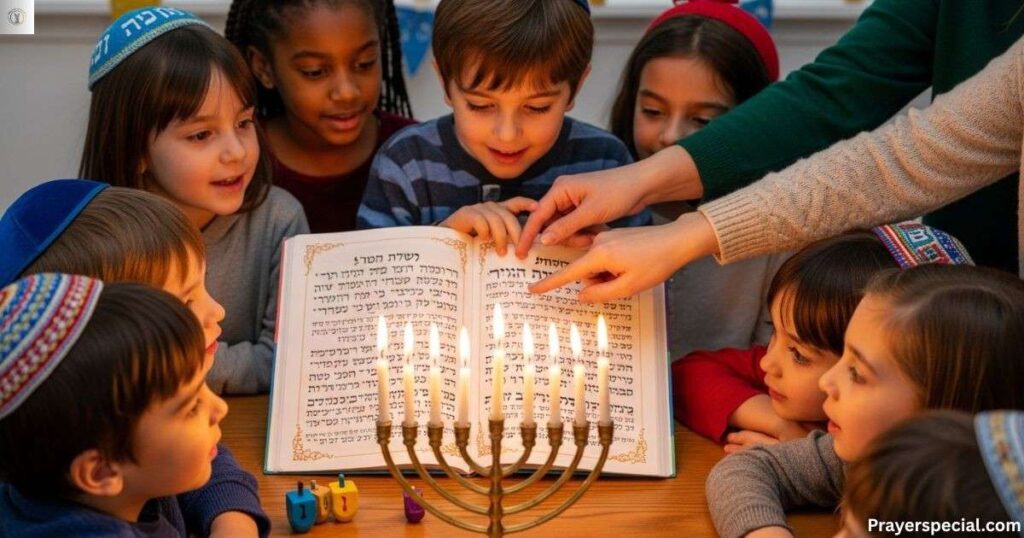
Hanukkah is a time when children can actively participate in tradition through candle lighting and simple prayers. Child-friendly Hanukkah blessings help young voices feel included while teaching core values such as gratitude, kindness, and hope. These short prayers are easy to understand and encourage meaningful family participation.
A Simple Blessing for Lighting the Candles
Prayer:
Thank you for the light of Hanukkah and the candles we light tonight.
May their glow remind us to be kind, brave, and caring, just like the lights that shine in the dark.
Meaning:
This blessing introduces children to the idea that lighting the candles is about more than tradition it is about bringing goodness into the world. The candles become symbols of kindness and courage that children can understand and remember.
Other ways to express this idea include:
- Seeing the candles as reminders to do good
- Learning that even small lights can make a difference
- Connecting brightness with kindness
A Blessing for the Hanukkah Story
Prayer:
We remember the Hanukkah story and the people who stayed strong and hopeful.
May their courage help us believe in ourselves and care for others.
Meaning:
This prayer helps children connect the Hanukkah story to everyday values. It highlights courage and hope without complexity, allowing children to see the story as something meaningful in their own lives.
Alternative ways to share this feeling include:
- Learning from the bravery of others
- Understanding that hope can grow in hard times
- Remembering stories that teach strength and care
A Blessing of Thanks for Being Together
Prayer:
We are thankful for our family, our friends, and this happy moment.
May Hanukkah fill our home with love, laughter, and light.
Meaning:
This blessing focuses on gratitude and togetherness ideas children naturally understand. It encourages awareness of shared joy and reinforces the importance of family and community during Hanukkah.
This idea may also be expressed as:
- Saying thank you for time spent together
- Celebrating joy and closeness
- Recognizing home as a place of warmth
Why Child-Friendly Prayers Are Important
Simple Hanukkah prayers allow children to feel connected to tradition without feeling overwhelmed. They create moments of learning, reflection, and participation, helping children associate Hanukkah with warmth, meaning, and joy.
Through these blessings, children learn that even small words and small lights can carry great meaning.
How to Say the Hanukkah Prayer Step by Step

Saying the Hanukkah prayer follows a simple and meaningful sequence. The steps are designed to help the moment feel intentional rather than rushed, allowing the candle lighting to become both a ritual and a reflection. Whether lighting the menorah alone or with others, following these steps creates clarity and connection.
Prepare the Menorah and Candles
Before beginning the prayers, place the candles in the menorah from right to left, adding one new candle each night. Position the shamash so it is ready to light the others.
Meaning:
This step encourages mindfulness before action. Preparing the candles creates a pause, helping shift attention from daily activities to the significance of the ritual.
This idea can also be expressed as:
- Creating space for intention
- Beginning with awareness
- Preparing both the candles and the heart
Stand or Sit Quietly and Focus
Take a brief moment of stillness before reciting the prayers. This pause allows focus and presence, especially when gathering with family or friends.
Meaning:
Stillness helps transform the ritual into a reflective experience. It reminds us that meaning often begins with attention.
Alternative ways to understand this step include:
- Centering the mind
- Entering the moment with purpose
- Slowing down to reflect
Recite the Hanukkah Blessings
Recite the traditional blessings before lighting the candles. On the first night, three prayers are said; on the remaining nights, two are recited.
Meaning:
The blessings give voice to gratitude, remembrance, and intention. Speaking the words aloud connects personal experience to shared tradition.
This step may also be viewed as:
- Giving meaning to the act of lighting
- Connecting words with action
- Participating in a collective memory
Light the Candles from Left to Right
Using the shamash, light the newest candle first, then continue lighting toward the right.
Meaning:
This method highlights growth and progression. Each new candle represents an added layer of light, emphasizing that hope increases over time.
Other ways to express this idea include:
- Honoring growth and continuity
- Recognizing progress, one step at a time
- Allowing light to expand gradually
Take a Moment to Reflect
After lighting the candles, pause and observe the flames. Some people sing, share reflections, or simply sit quietly.
Meaning:
This moment allows the ritual to settle. Watching the candles burn encourages reflection on light, gratitude, and the message of Hanukkah.
This pause may also be understood as:
- Letting the meaning sink in
- Creating space for gratitude
- Allowing the light to speak without words
Why Following the Steps Matters
The step-by-step approach helps make the Hanukkah prayer accessible and meaningful. It removes uncertainty while encouraging intention, turning a simple ritual into a reflective experience.
By following these steps, the act of lighting the menorah becomes a moment of clarity, connection, and growing light one night at a time.
Complete Hanukkah Prayer Text for All Eight Nights
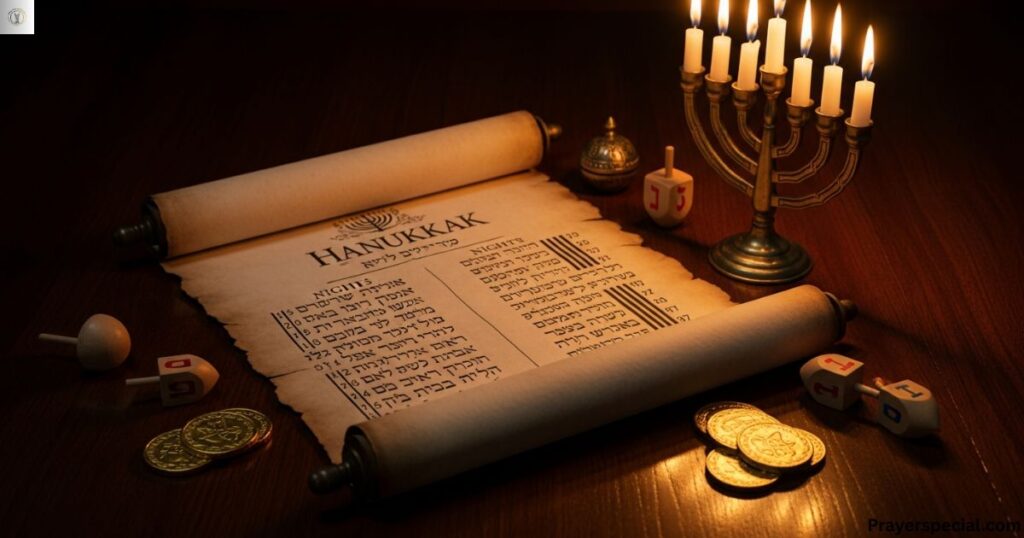
The Hanukkah candle-lighting ritual unfolds over eight nights, gradually increasing light and meaning. While the number of candles changes each evening, the prayers remain rooted in three central themes: purposeful action, remembrance of miracles, and gratitude for life. Understanding which prayers are recited on which nights helps families and individuals approach the ritual with confidence and intention.
Prayers Recited on the First Night of Hanukkah
On the first night, three prayers are traditionally recited before lighting the candles. Together, they mark the beginning of the festival and set a reflective tone for the days ahead.
Prayer Focus:
- The sacred act of lighting the candles
- Remembering miracles of the past
- Gratitude for reaching this moment
Meaning:
The first night emphasizes beginnings. These prayers acknowledge the privilege of starting the festival, recalling history while also appreciating the present moment. They invite reflection on both collective memory and personal experience.
Alternative ways to understand this moment include:
- Welcoming the festival with intention
- Recognizing new beginnings as meaningful milestones
- Expressing gratitude for time, life, and continuity
Prayers Recited on Nights Two Through Eight
From the second night onward, two prayers are recited before lighting the candles. The prayer of gratitude for reaching the season is omitted, while the focus remains on action and remembrance.
Prayer Focus:
- Continuing the sacred ritual
- Honoring miracles across generations
Meaning:
As the festival progresses, these prayers emphasize consistency and growth. Each additional candle represents increasing light, reinforcing the idea that hope and meaning expand through repetition and commitment.
This progression may also be understood as:
- Building light one step at a time
- Strengthening tradition through continuity
- Renewing faith through daily practice
How the Prayers Evolve Across the Eight Nights
Although the words of the prayers remain the same, their impact often deepens as the nights pass. The growing menorah reflects accumulation of light, memory, and shared experience.
Each night offers an opportunity to revisit the same ideas with fresh perspective:
- The act of lighting becomes more familiar
- The story of Hanukkah feels more present
- Gratitude grows alongside the light
Why the Complete Eight-Night Structure Matters
Reciting the Hanukkah prayers across all eight nights transforms the festival into a journey rather than a single event. The repetition encourages mindfulness, while the increasing candles symbolize resilience and hope.
By following the full prayer structure, the menorah becomes more than a visual symbol it becomes a steady reminder that light grows through dedication, remembrance, and gratitude.
More also: Happy Thanksgiving Prayer for Family, Friends, and Loved Ones
FAQ,s
What is the prayer for Hanukkah?
The Hanukkah prayer, or blessing, is recited before lighting the menorah. It thanks God for the mitzvot, remembers the miracles of the past, and on the first night, expresses gratitude for reaching the season.
How many prayers do you say on the second night of Hanukkah?
On the second night, you say two prayers: the blessing over the candles and the blessing remembering the miracles for your ancestors. The Shehechiyanu blessing is only said on the first night.
What is forbidden during Hanukkah?
There are no strict prohibitions during Hanukkah itself, unlike Shabbat or other holidays. The main focus is on lighting the menorah, celebrating, and following traditional customs like playing dreidel and eating foods fried in oil.
What is the prayer for the 7th night of Hanukkah?
On the seventh night, you recite the same two prayers as the other nights (except the first night). One blessing is for lighting the candles, and the second is to remember the miracles God performed for the Jewish people.
What do Jews say for happy Hanukkah?
The common greeting is “Chag Sameach” (Happy Holiday) or “Hanukkah Sameach” (Happy Hanukkah), expressing joy and celebration throughout the festival.
Conclusion
Hanukkah is a beautiful time to celebrate light, miracles, and family. By learning the Hanukkah prayers and understanding their meaning, you can make each night of the festival more meaningful, whether you’re lighting the menorah alone, with children, or with loved ones.
The words of the blessings connect us to centuries of tradition while reminding us to be grateful for the present moment.No matter which night it is, taking a few minutes to focus, recite the prayers, and reflect on the miracles can make Hanukkah a joyful and inspiring experience.
As an SEO content writer, I develop and implement content strategies to enhance online visibility and drive organic traffic. With five years of strong experience in the marketing and content writing field. In his spare time he enjoys playing badminton, which helps him stay active and sharpen his strategic thinking skills.