Have you ever tried playing a classic rock song on guitar, only to get stuck on the chord changes? You’re not alone. If you’ve been struggling to figure out Livin on a Prayer chords, it can feel frustrating when the song sounds great in your head but tricky under your fingers. We’ve all been there wanting to play along with Bon Jovi but getting tangled up in the transitions.
In this post, you’ll find a clear, step-by-step guide to Livin on a Prayer chords that’s perfect for beginners and intermediate players alike. We’ll break down the chords, show you the strumming patterns, and offer tips to make your transitions smooth. By the end, you’ll feel confident picking up your guitar and playing this iconic song exactly the way you’ve imagined.
Bon Jovi Livin on a Prayer Chords with Strumming Pattern

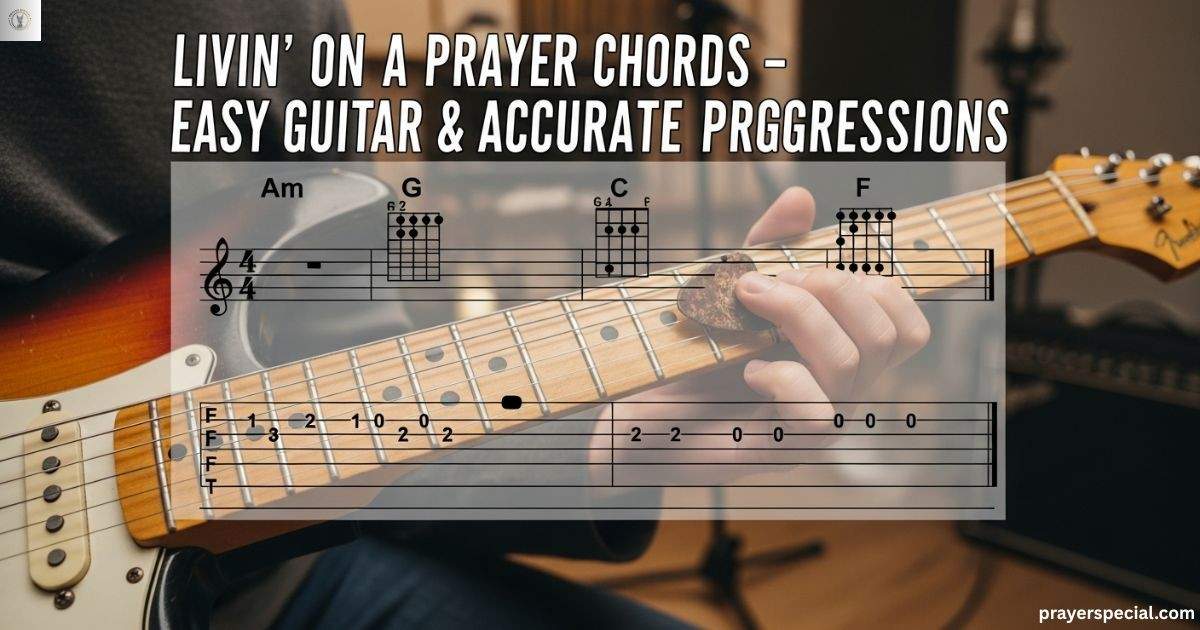
Chord Progression Overview
This song is built around a small set of open chords, making it approachable for most players while still sounding full and powerful. The progression stays consistent through verses and choruses, which helps with timing and confidence during transitions.
Alternative expressions of the same idea:
- The chord structure is simple but effective.
- A limited chord set carries the entire song.
- Familiar open chords drive the progression.
Recommended Strumming Pattern
The strumming follows a steady down-up motion that matches the song’s driving rock feel. Keeping your hand relaxed is essential to maintain rhythm, especially during faster sections. Focus on even strokes rather than force.
Alternative expressions:
- Use a consistent down-up strum for groove.
- Prioritize rhythm over volume.
- Let the tempo guide your hand movement.
Timing and Rhythm Feel
The rhythm relies on strong downbeats with lighter upstrokes in between. Accenting the first beat of each measure helps lock in with the song’s energy and keeps the progression tight.
Alternative expressions:
- Emphasize the main beats.
- Keep accents controlled and clean.
- Stay locked into the pulse.
Chord Changes and Transitions
Smooth chord transitions are more important than speed. Practice moving between shapes slowly at first, then increase tempo once the changes feel natural. Clean transitions improve overall sound quality.
Alternative expressions:
- Accuracy matters more than pace.
- Train muscle memory for chord shifts.
- Clean changes create a polished sound.
Playing Tips for Better Control
Use light palm control if needed to reduce string noise, especially during verses. Strumming closer to the bridge adds brightness, while moving toward the neck softens the tone.
Alternative expressions:
- Adjust hand position for tone control.
- Reduce unwanted string noise.
- Shape the sound with subtle technique.
Practice Approach
Start with the chord progression alone, then add the strumming pattern. Breaking the song into sections makes it easier to learn and helps maintain consistency throughout the performance.
Alternative expressions:
- Learn in sections, not all at once.
- Build rhythm before speed.
- Practice progression first, pattern second.
Livin on a Prayer Guitar Chords (Original Key)
Original Key Overview
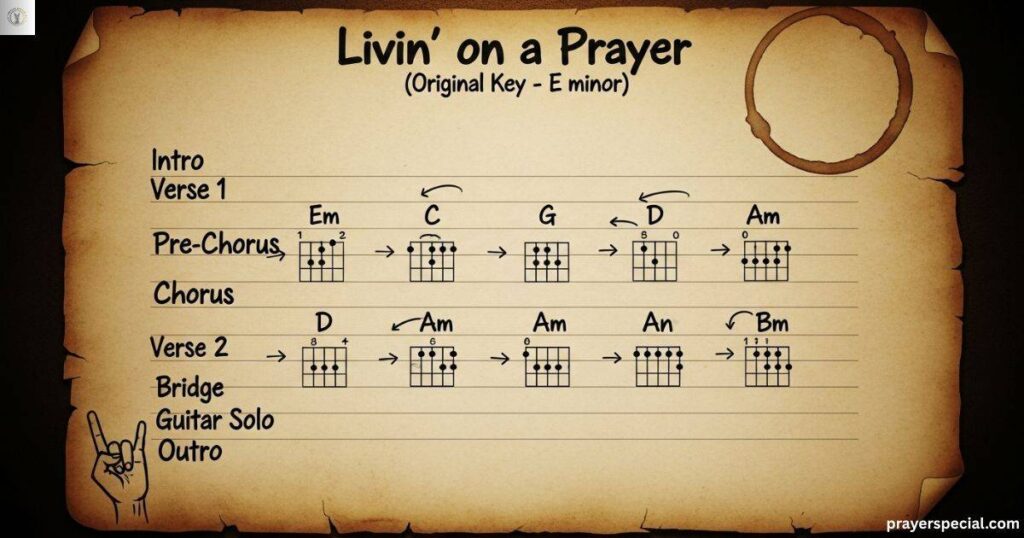
The original key preserves the song’s natural energy and vocal range. Playing in this key keeps the chord voicings authentic and maintains the balance between brightness and depth that defines the track.
Alternative expressions:
- The original key delivers the intended tonal character.
- This key keeps the song true to its source.
- Authentic sound comes from staying in the original key.
Core Chord Set
The song relies on a compact group of chords that repeat throughout most sections. These shapes are comfortable on the fretboard and allow smooth movement without excessive hand strain.
Alternative expressions:
- A small chord set drives the progression.
- Familiar shapes support consistent play.
- Repetition strengthens muscle memory.
Chord Voicing and Tone
Using open-position chords helps the guitar sound full and resonant. Clean fretting and controlled pressure ensure clarity, especially when chords ring together in the chorus sections.
Alternative expressions:
- Open voicings enhance resonance.
- Clear fretting improves note definition.
- Let the chords ring naturally.
Playing in the Original Pitch
Staying in the original pitch avoids tonal loss that can occur with transposing. This approach works well for players aiming to match the recorded feel or play along with the original track.
Alternative expressions:
- Original pitch keeps tonal accuracy.
- Avoid transposition for true alignment.
- Match the recording’s natural sound.
Common Chord Transition Flow
Most transitions follow predictable movement patterns, making them easier to anticipate. Practicing these shifts in sequence improves timing and keeps the rhythm stable.
Alternative expressions:
- Predictable transitions support flow.
- Repeated movement builds confidence.
- Consistent shifts improve timing.
Practice Focus for Accuracy
Slow practice in the original key helps prevent muted strings and timing errors. Once accuracy is locked in, increasing tempo feels more natural and controlled.
Alternative expressions:
- Start slow for clean execution.
- Accuracy comes before speed.
- Controlled practice leads to confidence.
Easy Livin on a Prayer Chords – No Capo Required
Beginner-Friendly Chord Shapes
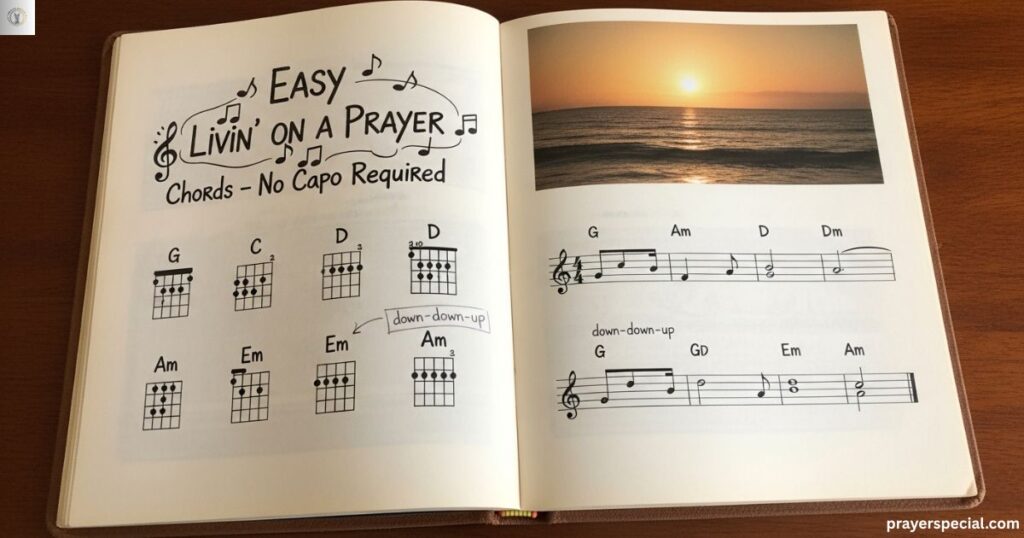
This version uses simple open chords that are comfortable for new players. The shapes are easy to memorize and allow you to focus more on rhythm rather than finger placement.
Alternative expressions:
- Open chords simplify learning.
- Basic shapes reduce hand tension.
- Simple fingering improves confidence.
No Capo Setup
Playing without a capo keeps the setup straightforward and removes extra adjustments. This approach is ideal for practice sessions and quick play-throughs without changing tuning or position.
Alternative expressions:
- No capo keeps things simple.
- Direct play without repositioning.
- Straightforward setup for fast learning.
Smooth Chord Transitions
The chord changes in this version are designed to be smooth and predictable. Repeated transitions help build muscle memory and reduce hesitation during strumming.
Alternative expressions:
- Predictable changes support flow.
- Repetition builds coordination.
- Smooth movement improves timing.
Simplified Rhythm Feel
The rhythm can be played with a basic down-up strumming motion. Keeping the pattern relaxed helps maintain tempo without overcomplicating the groove.
Alternative expressions:
- Simple strumming keeps control.
- Relaxed motion supports rhythm.
- Consistent strokes improve timing.
Comfortable Tempo Control
Slower practice speeds allow better control over chord clarity. Once the progression feels natural, increasing tempo becomes easier without losing accuracy.
Alternative expressions:
- Start slow for clarity.
- Speed comes after control.
- Gradual tempo increases work best.
Ideal Practice Approach
This no-capo version works well for beginners practicing at home or in group settings. It allows players to focus on consistency, timing, and clean sound.
Alternative expressions:
- Great for early-stage practice.
- Focus on consistency first.
- Clean playing builds confidence.
Simplified Livin on a Prayer Chords for New Players
Easy-to-Learn Chord Selection
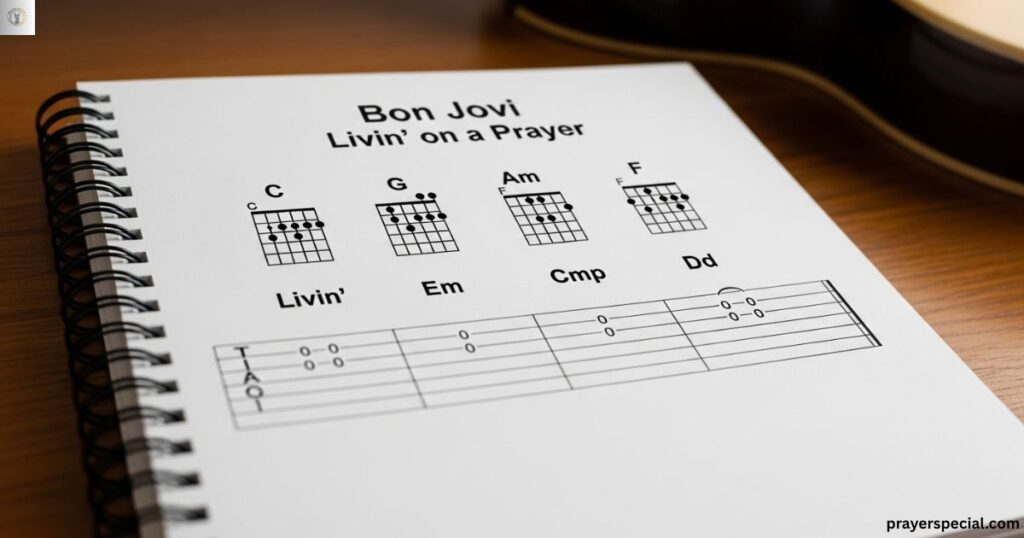
This simplified version focuses on the most commonly used open chords. The reduced chord set helps new players stay comfortable on the fretboard while learning the song structure.
Alternative expressions:
- Fewer chords make learning faster.
- Basic shapes support beginners.
- Simple chords reduce confusion.
Reduced Finger Movement
The chord shapes are chosen to minimize hand movement. This allows smoother transitions and helps prevent finger fatigue during longer practice sessions.
Alternative expressions:
- Less movement improves control.
- Short transitions feel more natural.
- Efficient fingering saves energy.
Straightforward Strumming Approach
A basic strumming pattern keeps the rhythm steady without extra complexity. This allows players to focus on timing rather than advanced techniques.
Alternative expressions:
- Simple strumming builds rhythm.
- Keep strokes even and relaxed.
- Focus on timing first.
Slower Learning Pace
The simplified progression works well at slower tempos. Practicing at a reduced speed helps lock in accuracy before increasing the pace.
Alternative expressions:
- Slow practice improves accuracy.
- Speed comes with repetition.
- Control matters more than tempo.
Clean Sound Development
Using simplified chords makes it easier to achieve a clean sound. Proper finger placement and even pressure help avoid muted or buzzing strings.
Alternative expressions:
- Clean fretting improves tone.
- Proper pressure prevents noise.
- Clear chords boost confidence.
Confidence-Building Practice
This version is ideal for new players who want steady progress. Mastering a simplified arrangement builds confidence and prepares players for more advanced versions later.
Alternative expressions:
- Confidence grows with simplicity.
- Small wins lead to progress.
- A strong base supports growth.
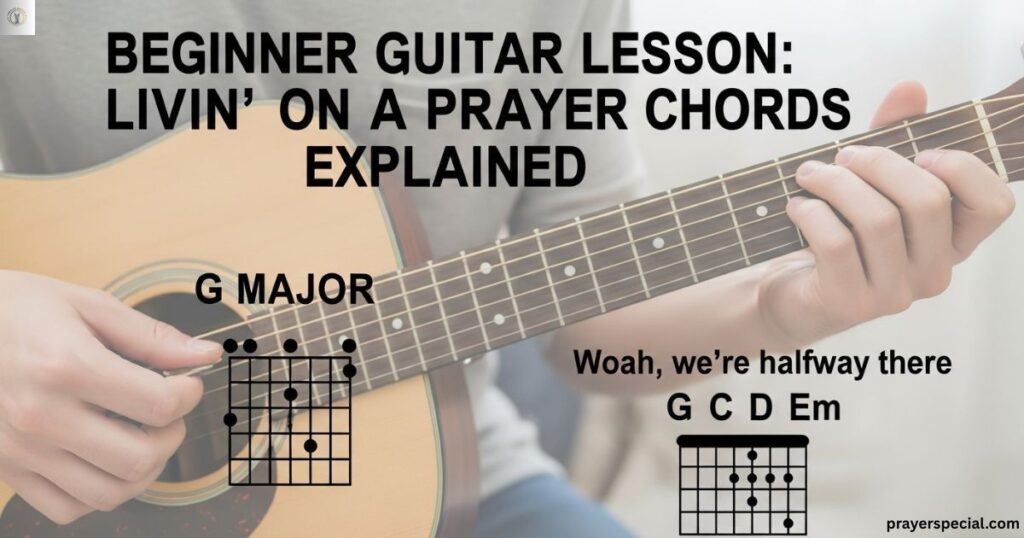
Beginner Guitar Lesson: Livin on a Prayer Chords Explained
Understanding the Chord Basics
This lesson starts with recognizing the core chords and how they function together. Learning their shapes and sound helps beginners understand the overall flow of the song.
Alternative expressions:
- Core chords form the foundation.
- Basic shapes create structure.
- Understanding chords improves confidence.
How the Chords Fit Together
The chord order follows a repeating pattern that is easy to memorize. This repetition helps new players focus less on memorization and more on rhythm.
Alternative expressions:
- Repeating patterns simplify learning.
- Familiar order supports flow.
- Consistency aids recall.
Hand Position and Finger Placement
Proper hand position improves clarity and reduces strain. Keeping fingers close to the fretboard allows faster and cleaner chord changes.
Alternative expressions:
- Good posture improves sound.
- Correct placement prevents buzzing.
- Efficient hand use supports control.
Strumming While Changing Chords
Beginners should practice switching chords slowly while maintaining a steady strum. This coordination builds timing and prevents breaks in rhythm.
Alternative expressions:
- Slow changes keep rhythm stable.
- Timing matters more than speed.
- Smooth coordination improves flow.
Common Beginner Mistakes to Avoid
Rushing transitions and pressing too hard on the strings are common issues. Staying relaxed helps maintain consistency and tone.
Alternative expressions:
- Relaxed hands play cleaner.
- Avoid rushing chord changes.
- Light pressure improves control.
Step-by-Step Practice Method
Breaking the lesson into small sections makes progress manageable. Mastering each part before moving on leads to stronger overall performance.
Alternative expressions:
- Learn in short sections.
- Build skills gradually.
- Strong basics lead to success.
Accurate Livin on a Prayer Chords – Studio Version
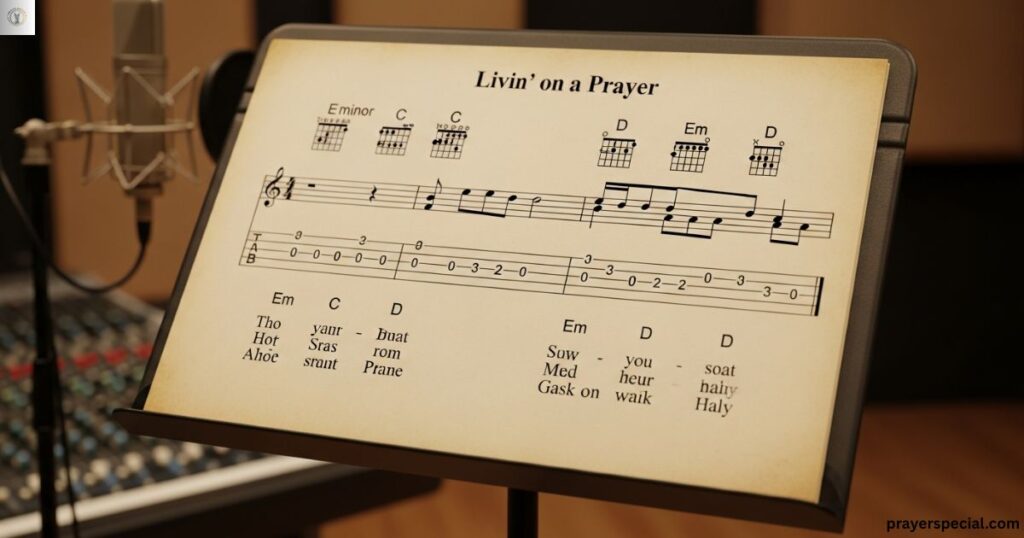
Studio-Quality Chord Accuracy
This version focuses on matching the chords exactly as they appear in the original studio recording. Precision ensures that the song sounds authentic when played along with the track.
Alternative expressions:
- Play the chords as recorded for authentic tone.
- Exact chord positions replicate the studio feel.
- Accurate fretting preserves the original sound.
Maintaining Proper Key and Pitch
Staying in the original key ensures that the song aligns with the vocals and instrumentation. This accuracy helps maintain the energy and feel of the studio version.
Alternative expressions:
- Original key preserves tonal integrity.
- Correct pitch matches the recording.
- Key accuracy keeps the song true to its source.
Smooth Transitions Between Chords
Studio arrangements require seamless transitions for polished sound. Practicing slow and precise chord changes improves overall flow and timing.
Alternative expressions:
- Smooth changes enhance consistency.
- Precise movement improves musical flow.
- Controlled transitions create a studio-like performance.
Strumming and Dynamics
The strumming pattern mirrors the rhythm of the studio track. Using controlled dynamics and accenting certain beats replicates the feel of the original performance.
Alternative expressions:
- Controlled strumming mimics studio rhythm.
- Accent beats to match original dynamics.
- Strum with intention to preserve feel.
Enhancing Tonal Clarity
Proper hand placement and finger pressure prevent unwanted buzzing and ensure each chord rings clearly. Studio versions rely on clean chords for professional sound.
Alternative expressions:
- Accurate fretting improves clarity.
- Clean chords enhance overall tone.
- Focused pressure produces polished sound.
Step-by-Step Practice Approach
Break the song into sections intro, verse, chorus, bridge, and solo to practice each part with studio precision. Gradually combine sections for a full, accurate rendition.
Alternative expressions:
- Learn in stages for better accuracy.
- Section practice ensures consistency.
- Combining parts gradually produces a complete performance.
How to Play Livin on a Prayer Chords Step by Step
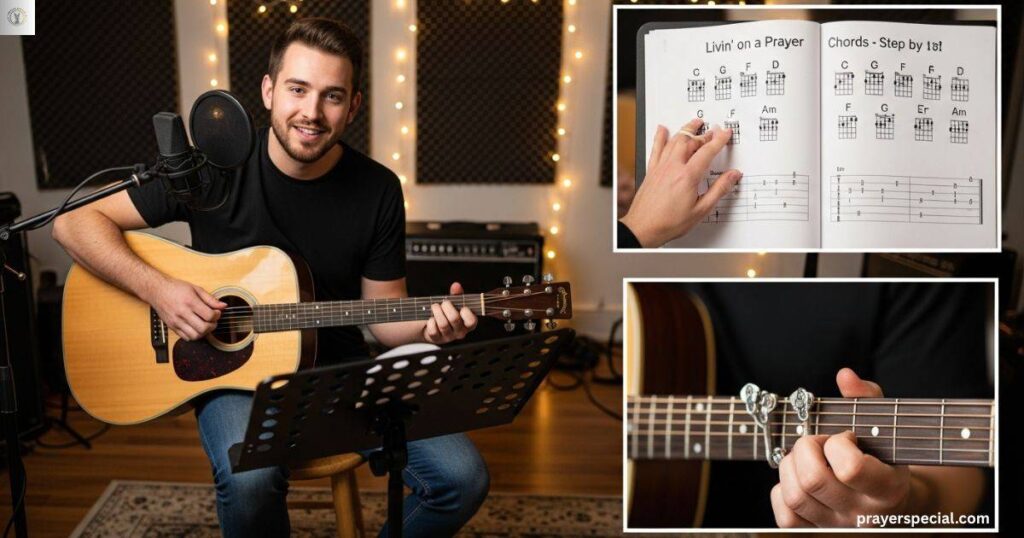
Familiarize Yourself with the Chords
Begin by learning all the chords used in the song. Knowing the shapes and finger placements beforehand makes practice smoother and reduces mistakes.
Alternative expressions:
- Learn chord shapes before attempting the song.
- Understanding each chord builds confidence.
- Familiarity with finger placement improves accuracy.
Practice Each Section Separately
Divide the song into manageable sections intro, verse, chorus, bridge, and solo. Practicing each section individually helps build muscle memory and timing.
Alternative expressions:
- Break the song into small parts.
- Section practice improves focus.
- Learning in segments enhances consistency.
Focus on Smooth Chord Transitions
Slowly move from one chord to the next while keeping a steady rhythm. Smooth transitions are more important than speed at this stage.
Alternative expressions:
- Accuracy comes before tempo.
- Controlled movement ensures clean sound.
- Gradual transitions build confidence.
Add the Strumming Pattern
Once chords are familiar, introduce the strumming pattern. Focus on even down-up strokes and accenting strong beats to capture the song’s rhythm.
Alternative expressions:
- Integrate strumming after chord practice.
- Keep rhythm consistent and relaxed.
- Accents create the song’s natural drive.
Combine Sections Gradually
Start connecting two sections at a time. Practice transitions between verse and chorus, then add bridge and solo. Gradual combination reduces errors and maintains timing.
Alternative expressions:
- Link sections progressively.
- Combine parts slowly for smooth play.
- Stepwise assembly ensures accuracy.
Practice with the Original Tempo
Once comfortable, play along with the original tempo. This builds rhythm control and helps replicate the feel of the studio version.
Alternative expressions:
- Increase speed gradually to match the song.
- Original tempo improves timing accuracy.
- Playing at full pace develops confidence.
Refine Tone and Dynamics
Pay attention to chord clarity and strumming pressure. Adjust hand placement for cleaner notes and replicate the song’s dynamics for a polished performance.
Alternative expressions:
- Focus on clean fretting for better tone.
- Adjust strumming intensity for dynamics.
- Small tweaks enhance overall sound.
More also: A Prayer for Today to Invite Blessings and Positivit
FAQ,s
What are the basic Livin on a Prayer chords for beginners?
The basic Livin on a Prayer chords include Em, C, D, and G, which repeat throughout the song. These open chords are easy for beginners and help you focus on strumming and transitions without getting overwhelmed. Starting with these chords allows you to play along with the original song quickly.
How do I play Livin on a Prayer chords with the correct strumming pattern?
The strumming pattern for Livin on a Prayer chords is a steady down-up rhythm with accents on the strong beats. Beginners can start slowly, focusing on even strokes, and gradually increase speed to match the original tempo. Practicing with the chord transitions ensures smooth rhythm throughout the song.
Can I play Livin on a Prayer chords without a capo?
Yes! You can play Livin on a Prayer chords in the original key without using a capo. The chords are simple open positions, making it easier for beginners to practice. Using no capo keeps the setup straightforward while maintaining the song’s authentic sound.
What is the easiest version of Livin on a Prayer chords for new guitar players?
The easiest version of Livin on a Prayer chords uses just Em, C, D, and G with a slow strumming pattern. This simplified approach helps new players focus on timing, chord clarity, and smooth transitions before attempting the full version. It’s perfect for building confidence.
How can I master Livin on a Prayer chords step by step?
To master Livin on a Prayer chords, start by learning each chord individually, then practice smooth transitions. Next, add the strumming pattern and break the song into sections: verse, chorus, bridge, and solo. Gradually combine the sections, increase tempo, and focus on chord clarity for a polished performance.
Conclusion
Learning Livin on a Prayer chords doesn’t have to be complicated. By starting with the basic chords, practicing smooth transitions, and following the strumming patterns step by step, even beginners can play this classic song confidently. Taking it section by section makes the learning process manageable and enjoyable.
With patience and consistent practice, you’ll soon be able to play along with the original track, capture the rhythm, and even add your own style. Whether you’re a beginner or improving your skills, mastering these chords is a rewarding step toward becoming a more confident guitarist.

As an SEO content writer, I develop and implement content strategies to enhance online visibility and drive organic traffic. With five years of strong experience in the marketing and content writing field. In his spare time he enjoys playing badminton, which helps him stay active and sharpen his strategic thinking skills.