Have you ever picked up a string of Islamic Prayer Beads and wondered how to use them properly, or what makes them so special? Maybe you’ve seen them in stores or online, but felt a little lost about their purpose or significance. It’s easy to feel unsure about where to start, especially when you want your prayers to feel meaningful and connected.
In this blog, we’ll walk you through everything you need to know about Islamic Prayer Beads from their history and spiritual meaning to how to use them, choose the right materials, and care for them. By the end, you’ll feel confident and inspired to make your dhikr more focused, mindful, and heartfelt.
What Are Islamic Prayer Beads and How Are They Used in Islam?
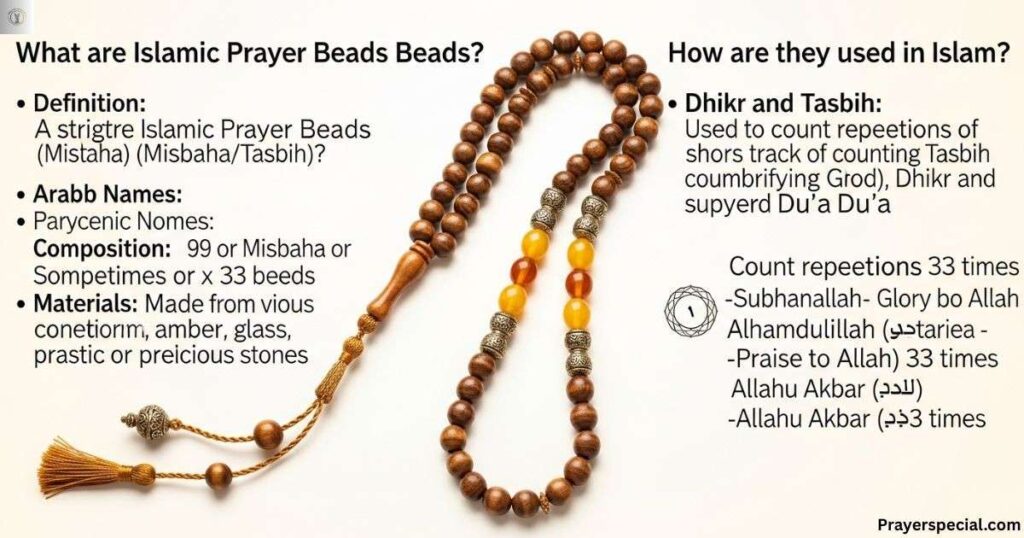
Islamic prayer beads, also known as tasbih or misbaha, are more than a simple string of beads they are a tangible companion in a believer’s journey of remembrance, reflection, and connection with Allah. Each bead serves as a gentle prompt, guiding the worshipper through dhikr, the mindful repetition of divine phrases. Here are some heartfelt prayers and reflections you can recite while using prayer beads:
Prayer for Gratitude
Main Prayer:
“Ya Allah, I thank You for the blessings You have granted me, seen and unseen. Guide me to use them wisely and always with a grateful heart.”
Alternative Expressions:
- “O Merciful One, instill in me a spirit of gratitude for every moment and every gift You have bestowed upon me.”
- “Allah, help me to recognize Your countless blessings and let my heart overflow with thankfulness in every action.”
Explanation:
While moving your fingers across the beads, reflect on the gifts in your life family, health, knowledge, and faith. Let each bead remind you of one blessing, cultivating mindfulness and appreciation.
Prayer for Guidance
Main Prayer:
“O Allah, illuminate my path with Your wisdom and guide my steps toward righteousness and truth.”
Alternative Expressions:
- “Ya Rahman, grant me clarity in my decisions and the courage to follow the way You have chosen for me.”
- “Guide me, O Lord, in all my choices, so that my heart remains steadfast in Your light.”
Explanation:
Use this prayer during moments of uncertainty or reflection. Each bead can symbolize a step toward conscious living, fostering spiritual focus and mental clarity.
Prayer for Forgiveness
Main Prayer:
“Ya Allah, forgive my mistakes, cleanse my heart of regret, and help me return to You with sincerity.”
Alternative Expressions:
- “O Most Forgiving, relieve me of my shortcomings and make me mindful of Your mercy in every action.”
- “Merciful Allah, let my errors be lessons, and my repentance be pure and steadfast.”
Explanation:
Reciting forgiveness prayers bead by bead allows for a meditative rhythm, gently guiding the mind to self-reflection and divine mercy.
Prayer for Peace and Calm
Main Prayer:
“O Allah, fill my heart with serenity, my mind with clarity, and my soul with tranquility.”
Alternative Expressions:
- “Ya Salaam, calm my worries, ease my burdens, and help me find inner peace in Your remembrance.”
- “Lord of Peace, let each breath and each bead carry me closer to stillness and harmony.”
Explanation:
The tactile act of moving beads can mirror the inner movement toward calm. Each bead becomes a step toward mental clarity and spiritual stability.
Prayer for Strength and Patience
Main Prayer:
“O Allah, grant me strength to face challenges, patience in trials, and courage to stay firm in faith.”
Alternative Expressions:
- “Ya Aziz, empower me with resilience and fill my heart with patience during life’s tests.”
- “Merciful Allah, guide me to endure hardships with dignity, hope, and unwavering trust in You.”
Explanation:
As you count each bead, reflect on the trials of life and your commitment to face them with grace. Let the rhythm of dhikr reinforce courage and endurance.
Different Types of Islamic Prayer Beads and Their Meanings
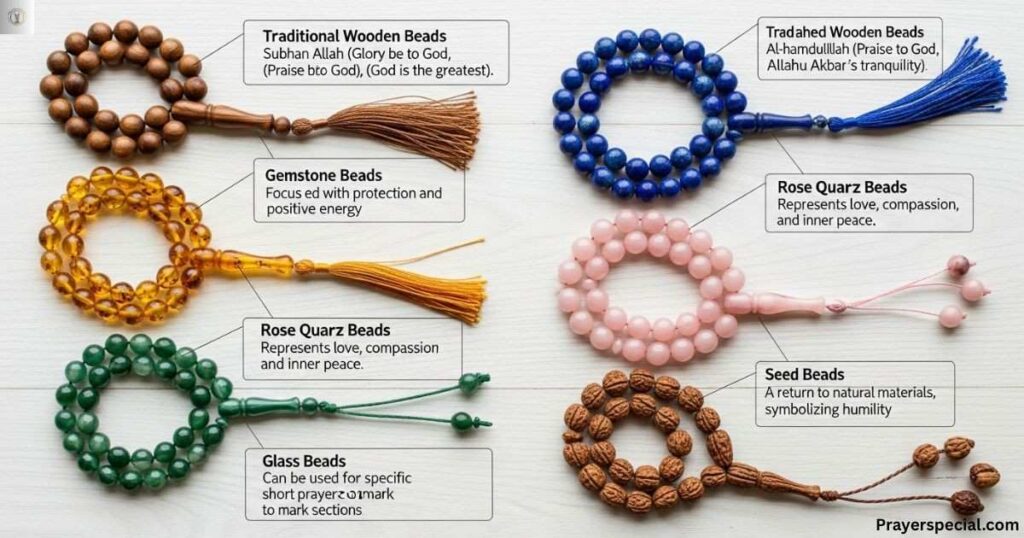
Islamic prayer beads come in a variety of materials, designs, and sizes, each carrying a unique spiritual symbolism. Whether crafted from wood, gemstones, or modern materials, the beads serve as a guide in dhikr, helping the worshipper focus on remembrance, reflection, and connection with Allah. Below are prayers aligned with different types of beads, along with alternative expressions to enrich your spiritual practice:
Wooden Prayer Beads – Prayer for Grounding and Humility
Main Prayer:
“O Allah, let Your presence ground my heart, and remind me of the simplicity and humility in all I do.”
Alternative Expressions:
- “Ya Rahman, keep me rooted in faith and humble in my actions before You.”
- “O Merciful One, let each bead guide me toward a life of simplicity and sincerity.”
Meaning & Connection:
Wooden beads symbolize humility, stability, and connection to nature. As you move your fingers along each bead, reflect on the importance of staying grounded and mindful in daily life.
Gemstone Prayer Beads – Prayer for Strength and Healing
Main Prayer:
“O Allah, bless me with strength, resilience, and health, so my body and soul may serve You faithfully.”
Alternative Expressions:
- “Ya Aziz, fill me with divine energy and healing, so I may endure challenges with patience and faith.”
- “O Lord, let Your light flow through me, bringing strength and balance to my mind and body.”
Meaning & Connection:
Gemstones represent strength, protection, and spiritual healing. Each bead can serve as a reminder of Allah’s power and mercy, promoting inner resilience and wellness.
Olive Wood Prayer Beads – Prayer for Peace and Wisdom
Main Prayer:
“Ya Allah, grant me peace in my heart and clarity in my thoughts, that I may act with wisdom and compassion.”
Alternative Expressions:
- “O Most Merciful, let tranquility guide me, and insight illuminate my path.”
- “Lord of Peace, help me carry calmness into my deeds and wisdom into my decisions.”
Meaning & Connection:
Olive wood beads symbolize peace, spiritual wisdom, and patience. As you move through each bead, reflect on cultivating calmness and thoughtful action in every moment.
Pearl or Glass Prayer Beads – Prayer for Purity and Reflection
Main Prayer:
“O Allah, purify my heart, cleanse my intentions, and guide me to reflect Your light in every action.”
Alternative Expressions:
- “Ya Quddus, let my mind and soul remain pure, free from distractions and negativity.”
- “O Merciful Lord, help me embody clarity and sincerity, shining Your guidance in my life.”
Meaning & Connection:
Pearls and glass beads represent purity, clarity, and reflection. Counting each bead encourages mindfulness, self-purification, and alignment with spiritual values.
Composite or Modern Material Beads – Prayer for Adaptability and Focus
Main Prayer:
“O Allah, help me stay focused, adaptable, and steadfast in remembrance, regardless of the challenges around me.”
Alternative Expressions:
- “Ya Rabb, guide me to use every tool and moment in life to strengthen my connection with You.”
- “O Lord, let me remain centered and present in dhikr, even amidst the distractions of the world.”
Meaning & Connection:
Modern or synthetic beads symbolize flexibility, accessibility, and the continuity of devotion across time and cultures. Their use reminds us that the intention behind dhikr is more important than the material itself.
Multi-colored or Decorative Beads – Prayer for Diversity and Unity
Main Prayer:
“O Allah, unite our hearts in faith, celebrating the diversity You have created in this world.”
Alternative Expressions:
- “Ya Allah, let our differences inspire harmony, compassion, and shared devotion to You.”
- “O Lord, help me appreciate the beauty in diversity while remaining steadfast in dhikr.”
Meaning & Connection:
Multi-colored beads reflect the rich diversity of human culture and creation. Each bead can symbolize a unique aspect of life, encouraging gratitude, inclusiveness, and spiritual unity.
Why Islamic Prayer Beads Usually Have 33 or 99 Beads
The 33 and 99 beads found on Islamic prayer beads are more than a numerical tradition they are deeply symbolic, guiding the worshipper through structured dhikr while reflecting on the divine attributes of Allah. Each bead is a step toward mindfulness, gratitude, and spiritual connection. Below are prayers aligned with the significance of these numbers, along with alternative ways to express each sentiment:
Prayer Reflecting the 33 Beads – Devotion and Mindfulness
Main Prayer:
“O Allah, let every bead I count deepen my devotion and focus my heart on Your presence.”
Alternative Expressions:
- “Ya Rahman, guide me to remain mindful of You in every thought and action, one bead at a time.”
- “O Lord, may each of these 33 beads remind me to dwell in Your remembrance with sincerity and concentration.”
Meaning & Connection:
The 33 beads often represent one-third of the full 99-name recitation, allowing worshippers to cultivate mindfulness and steady focus in dhikr. Each bead is a gentle reminder to slow down, reflect, and connect with the divine.
Prayer Reflecting the 99 Beads – Contemplation of Allah’s Names
Main Prayer:
“O Allah, with each of the 99 beads, let me contemplate Your beautiful names and embody their wisdom in my life.”
Alternative Expressions:
- “Ya Quddus, may every bead teach me patience, mercy, and guidance through Your attributes.”
- “O Most Merciful, help me reflect on Your names and let my actions mirror the qualities You embody.”
Meaning & Connection:
The 99 beads correspond to the 99 names of Allah, each representing a divine attribute. Counting them becomes a meditative practice, allowing the believer to internalize qualities like mercy, justice, wisdom, and love, and apply them in daily life.
Prayer for Structured Spiritual Growth
Main Prayer:
“O Allah, guide me to grow spiritually, step by step, bead by bead, through Your remembrance.”
Alternative Expressions:
- “Ya Rabb, let each bead be a milestone in my journey toward a heart aligned with Your will.”
- “O Lord, help me progress in faith and devotion, using this sacred rhythm to strengthen my soul.”
Meaning & Connection:
The structure of 33 or 99 beads provides rhythmic guidance, helping worshippers develop spiritual discipline, patience, and consistency in their dhikr. The repetition fosters both focus and emotional calm.
Prayer for Gratitude in Structured Practice
Main Prayer:
“O Allah, as I move through each bead, fill my heart with gratitude for Your blessings and Your guidance.”
Alternative Expressions:
- “Ya Rahim, remind me to be thankful for Your mercy with every recitation.”
- “O Merciful One, let each bead inspire reflection on the countless gifts You have granted me.”
Meaning & Connection:
Using 33 or 99 beads emphasizes structured remembrance, creating a rhythm of gratitude and meditation that enriches the worshipper’s daily spiritual practice.
- Clear headings for each type of prayer
- Main prayer plus alternative expressions for flexibility
- Concise explanations linking bead count to spiritual meaning
- Tone: informative, reflective, and instructive
Best Materials Used in Authentic Islamic Prayer Beads
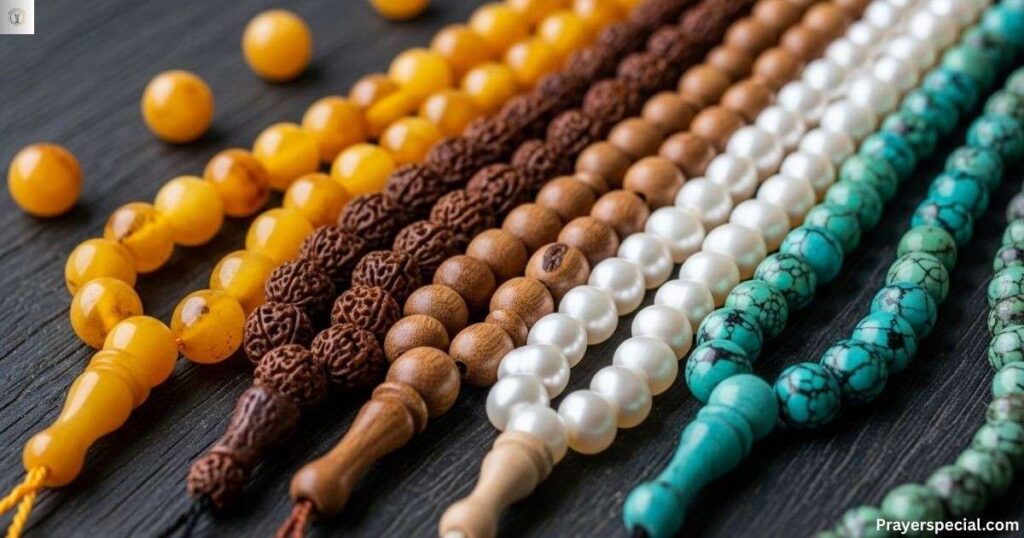
The material of Islamic prayer beads is more than just a physical choice; it often carries symbolic meaning and affects the tactile and spiritual experience of dhikr. From natural wood to precious gemstones, each material can enhance mindfulness, devotion, and reflection. Below are prayers associated with some of the most authentic materials, with alternative expressions for depth and flexibility.
Olive Wood Beads – Prayer for Peace and Spiritual Clarity
Main Prayer:
“O Allah, let the calm strength of these olive wood beads bring peace to my heart and clarity to my mind.”
Alternative Expressions:
- “Ya Rahman, fill my thoughts with tranquility and guide my heart toward understanding and wisdom.”
- “O Merciful One, let every bead remind me to carry serenity and insight into my daily life.”
Meaning & Connection:
Olive wood symbolizes peace, patience, and reflection. Using these beads encourages a mindful rhythm that grounds the soul and enhances spiritual focus during dhikr.
Sandalwood Beads – Prayer for Purity and Humility
Main Prayer:
“O Allah, purify my intentions and keep my heart humble as I move through each bead.”
Alternative Expressions:
- “Ya Quddus, cleanse my thoughts and inspire humility in all my deeds.”
- “O Lord, let the scent of sandalwood remind me of Your mercy and my need for sincerity.”
Meaning & Connection:
Sandalwood represents purity and devotion. Its natural aroma and texture can enhance concentration, helping the worshipper connect more deeply with the act of remembrance.
Gemstone Beads – Prayer for Strength, Healing, and Blessings
Main Prayer:
“O Allah, bless me with strength, resilience, and Your healing light as I recite dhikr with these beads.”
Alternative Expressions:
- “Ya Aziz, let Your energy flow through each bead, renewing my spirit and body in Your service.”
- “O Most Merciful, guide me to reflect Your attributes of strength and mercy in every action.”
Meaning & Connection:
Gemstones symbolize strength, protection, and spiritual healing. Counting each bead reminds the worshipper to reflect on divine attributes while seeking inner balance and resilience.
Pearl or Glass Beads – Prayer for Clarity and Spiritual Reflection
Main Prayer:
“O Allah, cleanse my heart and mind, allowing Your light to shine through my thoughts and actions.”
Alternative Expressions:
- “Ya Rahim, guide me to reflect on Your wisdom and maintain clarity in every decision.”
- “O Merciful One, let each bead encourage self-reflection and purity in intention.”
Meaning & Connection:
Pearls and glass beads symbolize clarity, purity, and insight. Each bead encourages the worshipper to meditate on divine guidance and align intentions with spiritual principles.
Natural Seed or Plant-Based Beads – Prayer for Simplicity and Connection to Nature
Main Prayer:
“O Allah, remind me of Your creation and let simplicity guide my heart in devotion and humility.”
Alternative Expressions:
- “Ya Rabb, help me embrace the natural beauty around me and find gratitude in every small blessing.”
- “O Lord, let each bead connect me to the world You have created and inspire mindfulness in all I do.”
Meaning & Connection:
Seeds and plant-based beads symbolize simplicity, grounding, and the beauty of creation. They encourage a reflective practice that honors both nature and spiritual awareness.
Composite or Modern Beads – Prayer for Accessibility and Consistency in Worship
Main Prayer:
“O Allah, help me remain consistent and devoted in dhikr, using every tool You have provided for remembrance.”
Alternative Expressions:
- “Ya Rahim, let every bead, no matter its material, strengthen my connection with You.”
- “O Lord, guide me to focus on intention and sincerity above all else, while counting these beads.”
Meaning & Connection:
Composite or modern beads reflect accessibility and inclusivity, emphasizing that the intention behind dhikr matters more than the material itself.
Are Islamic Prayer Beads Mentioned in the Quran or Hadith?
While Islamic prayer beads (tasbih or misbaha) are not explicitly mentioned in the Quran, their use is deeply rooted in the practice of dhikr, which is highly emphasized in both the Quran and Hadith. The beads serve as a helpful tool to maintain mindfulness, focus, and devotion while reciting Allah’s names or phrases of praise. Here are prayers inspired by this connection, with alternative expressions to enrich spiritual reflection:
Prayer for Following the Sunnah
Main Prayer:
“O Allah, help me follow the guidance of Your Prophet and emulate his devotion through remembrance and reflection.”
Alternative Expressions:
- “Ya Rabb, guide me to uphold the practices of Your beloved Messenger and keep my heart aligned with dhikr.”
- “O Most Merciful, let my devotion reflect the wisdom and sincerity taught by the Prophet Muhammad (peace be upon him).”
Meaning & Connection:
Even if beads themselves are not directly mentioned, their use supports the Prophetic tradition of remembrance. Each bead becomes a step in following the Sunnah and fostering spiritual discipline.
Prayer for Strengthening Connection with Allah
Main Prayer:
“O Allah, let each bead guide me closer to You, deepening my understanding and love through constant remembrance.”
Alternative Expressions:
- “Ya Rahman, help me feel Your presence in every recitation and strengthen my bond with You.”
- “O Lord, may my dhikr, bead by bead, illuminate my heart with Your mercy and guidance.”
Meaning & Connection:
Using prayer beads encourages structured and continuous dhikr, which is repeatedly encouraged in the Quran. The tactile rhythm helps the worshipper maintain focus and spiritual connection.
Prayer for Mindful Reflection on Divine Words
Main Prayer:
“O Allah, inspire me to reflect on Your words, to understand their meaning, and to let them guide my actions.”
Alternative Expressions:
- “Ya Rabb, let every bead remind me to contemplate Your verses and live in accordance with Your guidance.”
- “O Merciful One, help me internalize the lessons of the Quran as I engage in dhikr and reflection.”
Meaning & Connection:
Even though beads are not explicitly cited in scripture, they aid mindful engagement with Allah’s guidance, allowing each recitation to be thoughtful, reflective, and spiritually transformative.
Prayer for Sincerity in Worship
Main Prayer:
“O Allah, let my use of these beads be sincere, focused on You alone, and free from distraction or pretense.”
Alternative Expressions:
- “Ya Quddus, purify my intention and help me worship with honesty and devotion.”
- “O Lord, may every bead reflect true remembrance, humility, and submission to You.”
Meaning & Connection:
The value of prayer beads lies not in the physical object but in the intention behind their use. Each bead becomes a tool to cultivate sincerity, mindfulness, and devotion, aligning with Quranic and Hadith principles.
Prayer for Guidance and Enlightenment
Main Prayer:
“O Allah, let each recitation on these beads illuminate my heart, guide my actions, and strengthen my faith.”
Alternative Expressions:
- “Ya Rabb, may Your wisdom shine through my dhikr and influence every aspect of my life.”
- “O Most Merciful, help me find clarity, guidance, and spiritual growth with each bead I count.”
Meaning & Connection:
Prayer beads assist in practical application of dhikr, reinforcing the guidance and reminders emphasized in the Quran and Hadith. They serve as a bridge between knowledge, reflection, and action.
How to Care for and Store Your Islamic Prayer Beads Properly
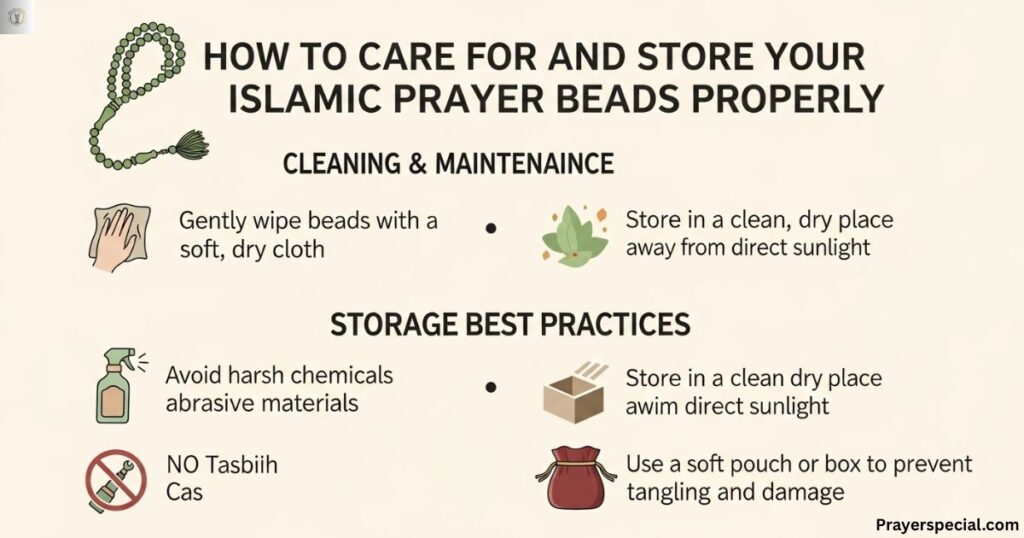
Caring for your Islamic prayer beads (tasbih or misbaha) is not only about preserving their physical beauty but also about honoring the sacred practice of dhikr they support. Proper care ensures the beads remain a tactile, mindful companion in your spiritual journey. Here are prayers inspired by the act of caring for and storing your beads, along with alternative ways to express each sentiment:
Prayer for Respect and Reverence
Main Prayer:
“O Allah, help me honor these beads as a tool of remembrance, treating them with care and respect.”
Alternative Expressions:
- “Ya Rabb, guide me to preserve this sacred companion, mindful of its role in my devotion.”
- “O Merciful One, let my handling of these beads reflect gratitude and reverence for Your guidance.”
Meaning & Connection:
Treating your beads with respect reinforces the spiritual importance of dhikr. Proper handling keeps the mind and heart aligned with intention and devotion.
Prayer for Mindful Use
Main Prayer:
“O Allah, let every touch of these beads focus my thoughts on You, keeping my remembrance sincere and mindful.”
Alternative Expressions:
- “Ya Rahman, help me use these beads with attention and devotion, mindful of each prayer.”
- “O Lord, may the rhythm of dhikr guide my heart toward sincerity and reflection with every bead.”
Meaning & Connection:
Maintaining mindful use encourages concentration and meditation, turning the beads into a tactile anchor for spiritual reflection.
Prayer for Protection and Preservation
Main Prayer:
“O Allah, protect these beads from harm, and preserve their beauty and purpose for continued spiritual benefit.”
Alternative Expressions:
- “Ya Quddus, let my tasbih remain intact and ready to guide me in dhikr at all times.”
- “O Merciful One, safeguard this instrument of devotion, so it may always support my remembrance of You.”
Meaning & Connection:
Proper storage, such as keeping beads in a pouch or box, ensures they are ready for daily use and maintains their symbolic and practical value in worship.
Prayer for Gratitude Through Care
Main Prayer:
“O Allah, remind me that caring for these beads is also a form of gratitude for Your guidance and mercy.”
Alternative Expressions:
- “Ya Rabb, let the way I preserve these beads reflect appreciation for the gift of remembrance You have granted me.”
- “O Most Merciful, help me see tending to these beads as a spiritual act, cultivating mindfulness and gratitude.”
Meaning & Connection:
The act of caring for prayer beads becomes an extension of dhikr, reinforcing gratitude and mindful devotion in daily life.
Prayer for Longevity and Continued Devotion
Main Prayer:
“O Allah, keep these beads ready to accompany me in worship, day after day, helping me grow in faith and devotion.”
Alternative Expressions:
- “Ya Rabb, may these beads remain a steadfast companion, supporting my dhikr and spiritual growth over time.”
- “O Lord, let each recitation on these beads strengthen my connection to You throughout my life.”
Meaning & Connection:
Caring for and properly storing your beads ensures that they remain a lasting aid in spiritual practice, helping maintain consistency and devotion.
History and Spiritual Significance of Islamic Prayer Beads (Tasbih)
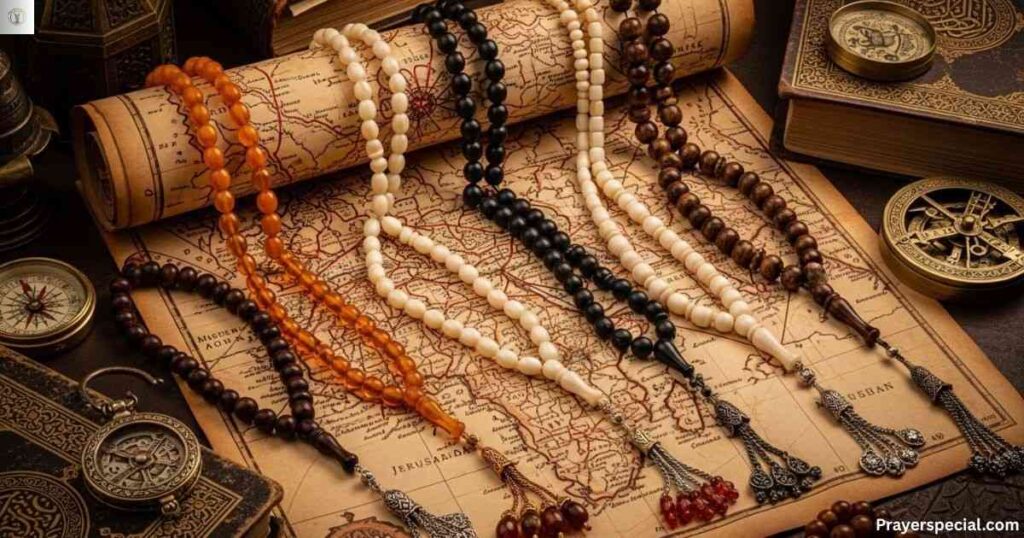
Islamic prayer beads, or tasbih, have a long and meaningful history. Their origin is tied to the early practice of dhikr, helping believers keep track of their prayers and reflect on the names and attributes of Allah. Beyond their physical form, tasbih beads symbolize devotion, mindfulness, and spiritual growth, offering a tangible way to connect with the divine. Below are prayers inspired by their history and spiritual significance, along with alternative expressions to enrich reflection:
Prayer for Connection to Tradition
Main Prayer:
“O Allah, let my hands and heart follow the path of those before me, connecting with the devotion and wisdom of generations of believers.”
Alternative Expressions:
- “Ya Rabb, inspire me to honor the spiritual heritage of those who have walked in Your remembrance.”
- “O Most Merciful, help me embrace the teachings and practices of the faithful who came before me.”
Meaning & Connection:
Using the tasbih links the worshipper to centuries of Islamic practice, reminding them that dhikr is a living tradition of faith and devotion.
Prayer for Mindfulness and Reflection
Main Prayer:
“O Allah, as I move through each bead, help me focus my heart, mind, and soul on You alone.”
Alternative Expressions:
- “Ya Rahman, guide me to use this sacred rhythm to cultivate mindfulness and spiritual clarity.”
- “O Lord, let each bead serve as a gentle reminder to reflect on Your presence in every moment.”
Meaning & Connection:
The spiritual significance of tasbih lies in enhancing concentration and meditation. Each bead fosters mindfulness, helping believers slow down and connect deeply with Allah.
Prayer for Gratitude Across Time
Main Prayer:
“O Allah, I thank You for the gift of dhikr and the guidance that has been passed down through generations.”
Alternative Expressions:
- “Ya Rabb, let my remembrance honor the devotion and gratitude of the faithful who preceded me.”
- “O Most Merciful, may my practice of tasbih reflect sincere appreciation for Your enduring guidance.”
Meaning & Connection:
Prayer beads carry the spiritual weight of gratitude, reminding worshippers to appreciate both the divine and the historical continuity of faith.
Prayer for Spiritual Elevation
Main Prayer:
“O Allah, let the act of counting these beads lift my soul, strengthen my faith, and draw me closer to You.”
Alternative Expressions:
- “Ya Aziz, elevate my heart with each recitation, transforming my remembrance into devotion.”
- “O Merciful One, help me rise in spiritual awareness and sincerity as I move through each bead.”
Meaning & Connection:
The tasbih is a tool for spiritual growth and elevation, allowing each repetition to reinforce faith, humility, and mindfulness.
Prayer for Continuity and Discipline
Main Prayer:
“O Allah, help me remain consistent in dhikr, using these beads to cultivate patience, devotion, and inner discipline.”
Alternative Expressions:
- “Ya Rabb, let this practice instill perseverance and focus in both my spiritual and daily life.”
- “O Lord, guide me to honor the tradition of dhikr with regularity, intention, and sincerity.”
Meaning & Connection:
The history of tasbih emphasizes discipline and continuity in worship. Each bead becomes a step toward steady spiritual practice and mindful remembrance.
More also:
FAQ,s
What are Islamic prayer beads called?
Islamic prayer beads are commonly called Tasbih or Misbaha. They are used by Muslims to help count recitations of dhikr, praises, and names of Allah.
What is this 📿?
This is a tasbih (Islamic prayer beads). It’s a string of beads used for counting prayers or recitations to aid focus and mindfulness in dhikr.
Are tasbih beads haram?
No, tasbih beads are not haram. They are a permissible tool in Islam to help maintain focus during remembrance of Allah, as long as they are used with proper intention.
What is the 33 times of tasbih?
The 33 times of tasbih refers to reciting “SubhanAllah” (Glory be to Allah), “Alhamdulillah” (Praise be to Allah), and “Allahu Akbar” (Allah is the Greatest) 33 times each after prayers using a tasbih.
Which dhikr 100 times?
A common dhikr recited 100 times is “La ilaha illallah” (There is no god but Allah) or repeating one of the phrases of tasbih, such as “SubhanAllah,” “Alhamdulillah,” or “Allahu Akbar,” depending on personal practice or guidance.\
Conclusion
Islamic prayer beads, or tasbih, are more than just strings of beads they are a meaningful tool to help Muslims focus, reflect, and connect with Allah during dhikr. Whether you use 33, 99, or even 100 beads, each one is a reminder to pause, be mindful, and strengthen your spiritual practice.
By understanding their history, types, materials, and proper care, you can make your prayers more intentional and heartfelt. Using tasbih consistently can bring peace, clarity, and devotion into daily life, turning simple recitations into a powerful spiritual journey.

As an SEO content writer, I develop and implement content strategies to enhance online visibility and drive organic traffic. With five years of strong experience in the marketing and content writing field. In his spare time he enjoys playing badminton, which helps him stay active and sharpen his strategic thinking skills.